UiPath Advanced RPA Developer v1.0 UiPath-ARDv1 Exam Questions
Preparing for the UiPath-ARDv1 exam is simple with Certs Vault. We offer easy-to-understand study materials that help you learn the most important exam topics. You can study using our PDF questions, practice online with a real exam-style test, or use the desktop practice software. Choose the study method that works best for you and prepare at your own pace.
At Certs Vault, we keep our UiPath-ARDv1 practice questions up to date. Whenever the exam syllabus or objectives change, we update our study materials so you always learn the latest topics. This helps you save time, avoid outdated content, and feel more confident when you take your exam.
Question #1 (Topic: demo questions)
A developer plans to create a process to automate a web application. The web application requires
HTML buttons and text boxes to be loaded. Although some assets may still be loading, the robot
should perform the UI actions once the buttons and text boxes are loaded.
Which property should be configured?
Correct Answer: D
Explanation:
Question #2 (Topic: demo questions)
A developer reviewed the following sequence:
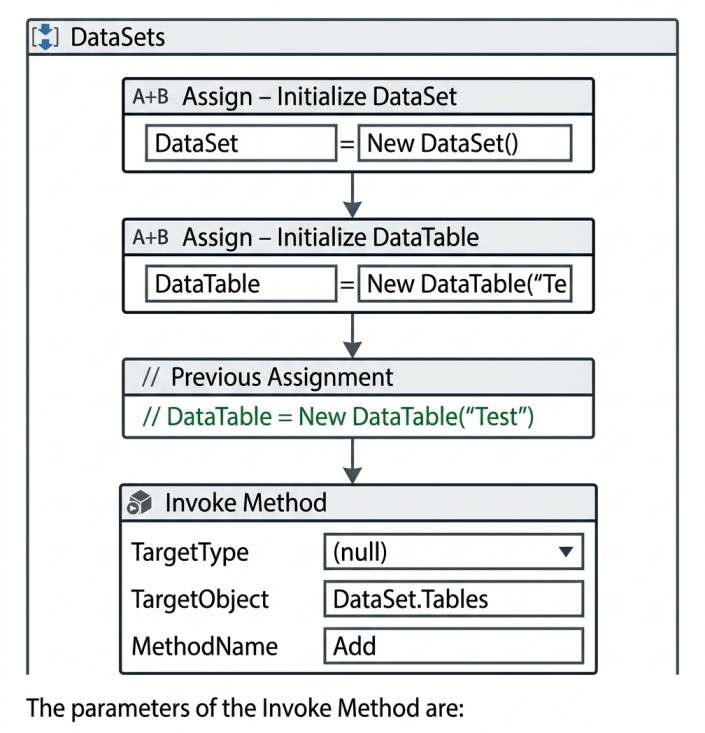
In order to get the table name of the first element in the DataSet, which expressions should the
developer use?
Correct Answer: C
Explanation:
In a DataSet, data is organized into multiple DataTables, and each table is stored inside the
In a DataSet, data is organized into multiple DataTables, and each table is stored inside the Tables collection. This collection is zero-indexed, meaning the first table is accessed using index 0, not 1. To retrieve the name of the first table, the correct expression is DataSet.Tables(0).TableName, which directly accesses the first DataTable and then reads its TableName property.
Option C (DataSet.Rows(0).TableName) is incorrect because a DataSet does not have a direct Rows collection. Rows belong to a DataTable, not to the DataSet itself. Therefore, you cannot access table information through Rows.
Similarly, options B and D are incorrect because they use index 1, which refers to the second table in the DataSet, not the first one.
So, the correct and valid expression to get the name of the first table is DataSet.Tables(0).TableName.
Question #3 (Topic: demo questions)
A developer was reviewing an Orchestration process whose "main" attribute is set to Main.xaml in project.json.
However, the process is not pausing as intended. What is a possible cause for this issue?.
Correct Answer: D
Explanation: