
Implementing Analytics Solutions Using Microsoft Fabric DP-600 Exam Questions
Preparing for the DP-600 exam is simple with Certs Vault. We offer easy-to-understand study materials that help you learn the most important exam topics. You can study using our PDF questions, practice online with a real exam-style test, or use the desktop practice software. Choose the study method that works best for you and prepare at your own pace.
At Certs Vault, we keep our DP-600 practice questions up to date. Whenever the exam syllabus or objectives change, we update our study materials so you always learn the latest topics. This helps you save time, avoid outdated content, and feel more confident when you take your exam.
Question #1 (Topic: demo questions)
Which type of data store should you recommend in the AnalyticsPOC workspace?
Correct Answer: C
Explanation:
A lakehouse (C) should be recommended for the AnalyticsPOC workspace. It combines the
A lakehouse (C) should be recommended for the AnalyticsPOC workspace. It combines the
capabilities of a data warehouse with the flexibility of a data lake. A lakehouse supports semistructured
and unstructured data and allows for T-SQL and Python read access, fulfilling the technical
requirements outlined for Litware. Reference = For further understanding, Microsoft's
documentation on the lakehouse architecture provides insights into how it supports various data
types and analytical operations
Question #2 (Topic: demo questions)
What should you recommend using to ingest the customer data into the data store in the
AnatyticsPOC workspace?
Correct Answer: D
Explanation:
For ingesting customer data into the data store in the AnalyticsPOC workspace, a dataflow (D) should
For ingesting customer data into the data store in the AnalyticsPOC workspace, a dataflow (D) should
be recommended. Dataflows are designed within the Power BI service to ingest, cleanse, transform,
and load data into the Power BI environment. They allow for the low-code ingestion and
transformation of data as needed by Litware's technical requirements. Reference = You can learn
more about dataflows and their use in Power BI environments in Microsoft's Power BI
documentation.
Question #3 (Topic: demo questions)
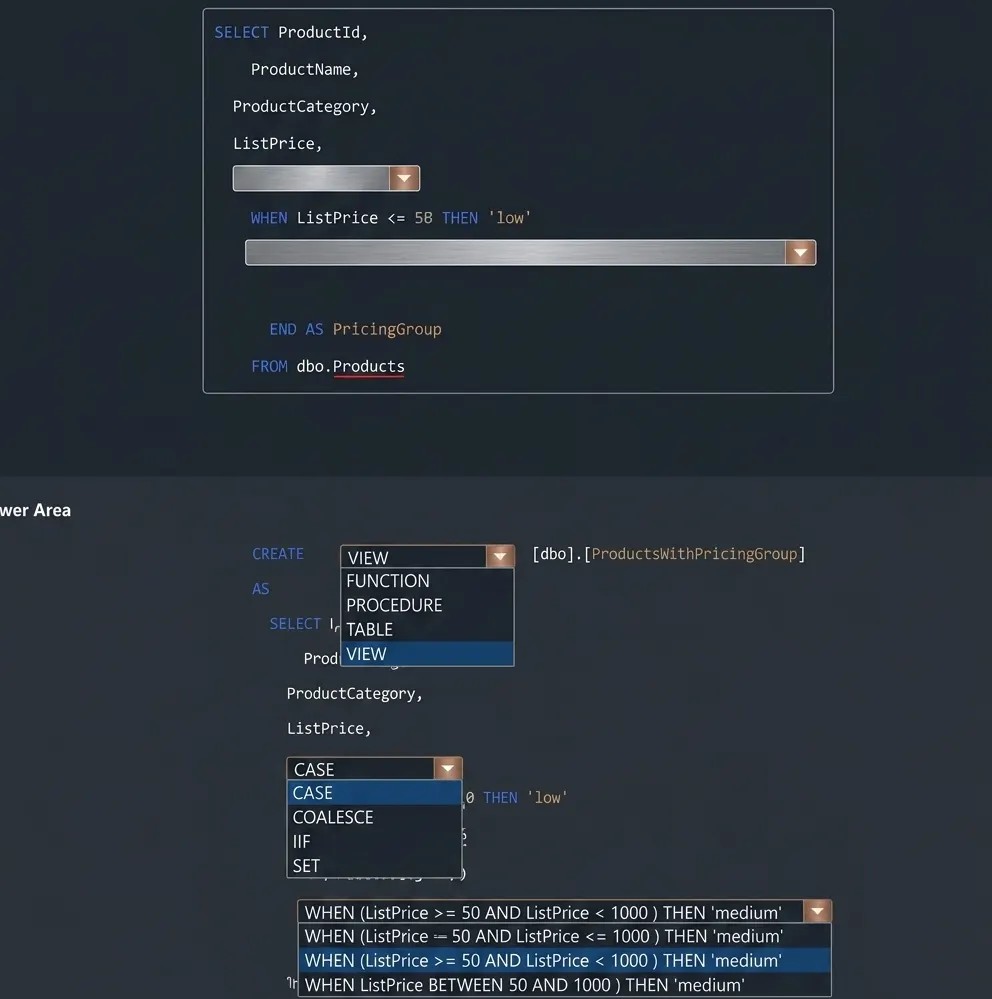
You need to resolve the issue with the pricing group classification.
How should you complete the T-SQL statement? To answer, select the appropriate options in the
answer area.
NOTE: Each correct selection is worth one point.
Answer
Explanation:
You should use CREATE VIEW to make the pricing group logic available for T-SQL queries.
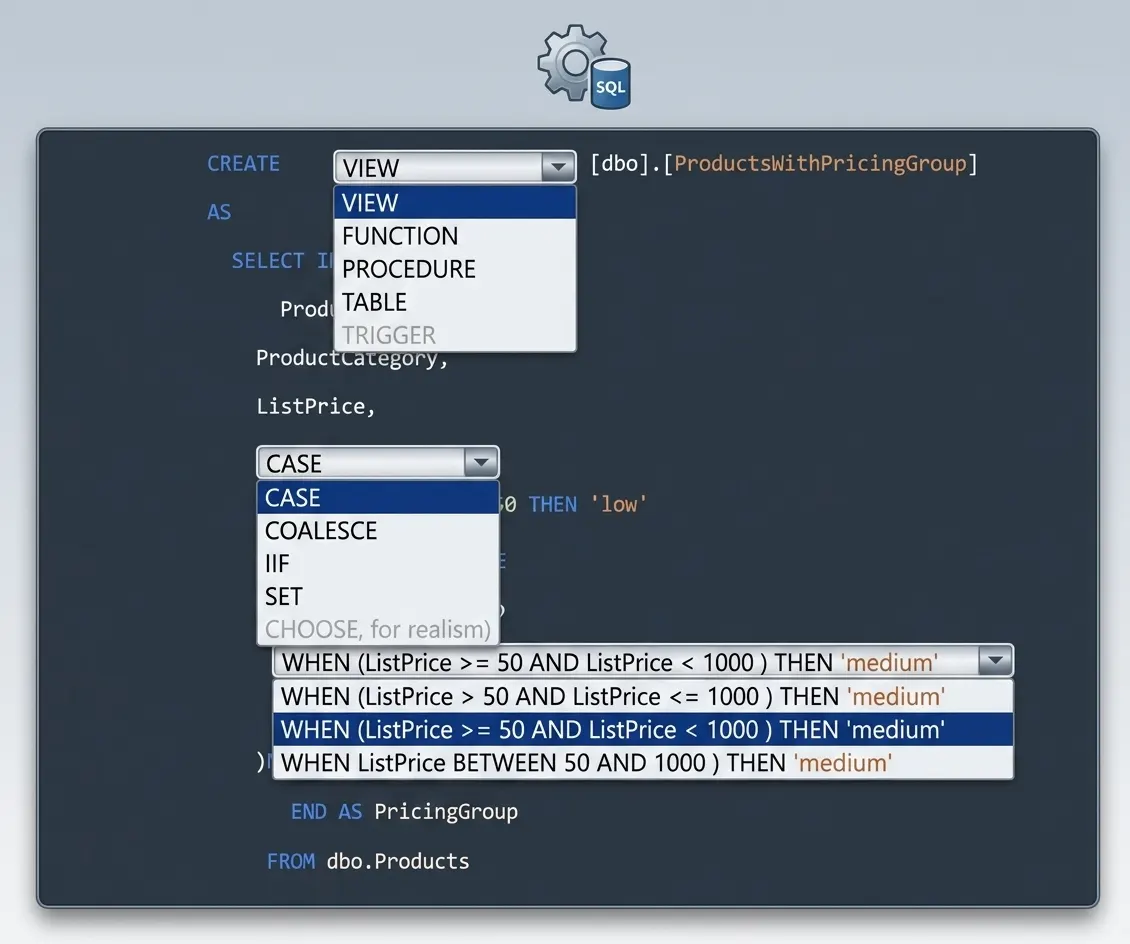
You should use CREATE VIEW to make the pricing group logic available for T-SQL queries.
The CASE statement should be used to determine the pricing group based on the list price.
The T-SQL statement should create a view that classifies products into pricing groups based on the
list price. The CASE statement is the correct conditional logic to assign each product to the
appropriate pricing group. This view will standardize the pricing group logic across different
databases and semantic models.
Question #4 (Topic: demo questions)
HOTSPOT
You to need assign permissions for the data store in the AnalyticsPOC workspace. The solution must
meet the security requirements.
Which additional permissions should you assign when you share the data store? To answer, select the
appropriate options in the answer area.
NOTE: Each correct selection is worth one point.
Answer
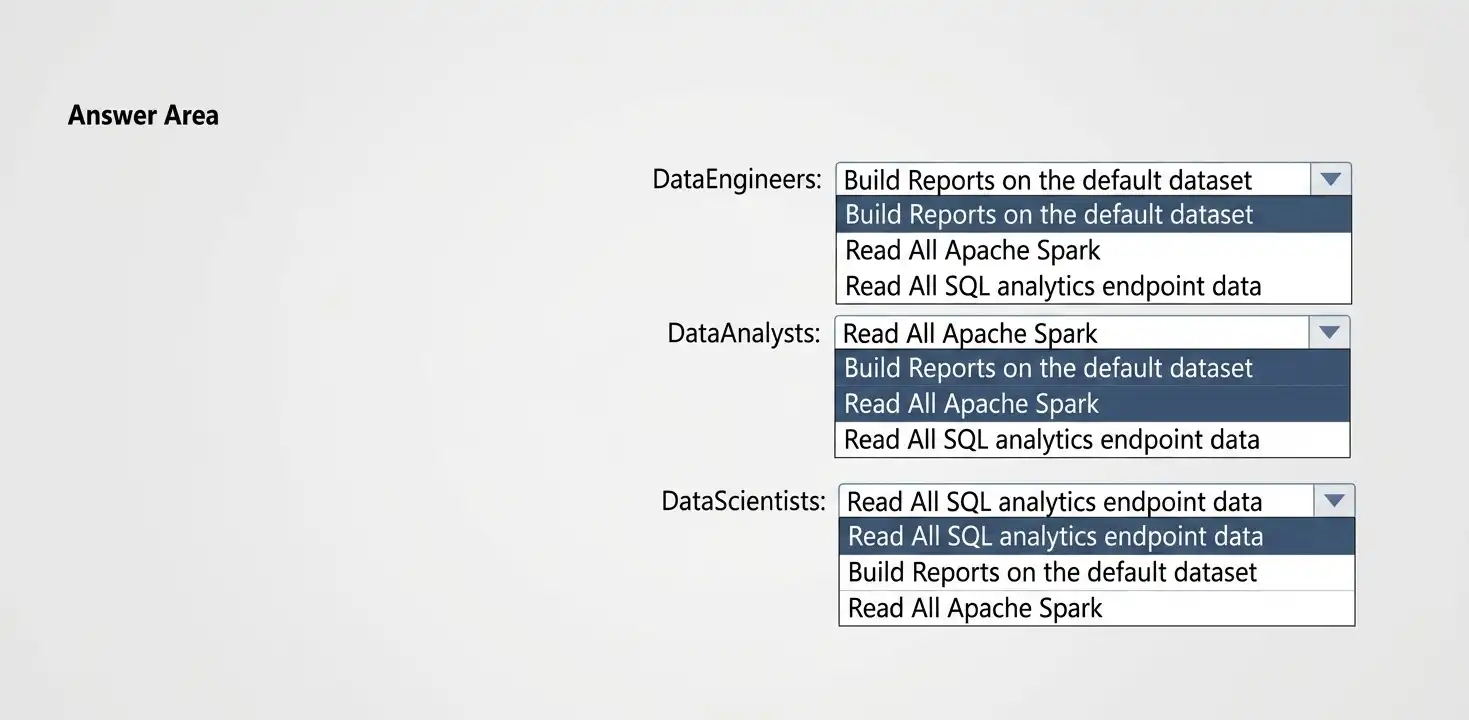
Explanation:
Data Engineers: Read All SQL analytics endpoint data